
SELECTED ARTICLE
We Should Not Ignore Discussing Calvinism
Estimated Time To Read Article
Its Rising Dissemination & Contention
For those unfamiliar with the subject of election and predestination, it represents one of the most contentious yet significant theological and doctrinal debates in church history. Not only has it shaped the perspectives of many believers in regard to salvation, the gospel, God’s grace, His divine purposes, and His absolute sovereignty, but equally and despite those who claim this subject nonessential or non-salvation critical, its profound implications on human free will, human responsibility, God’s character, and His divine justice has undeniably influenced many an unbeliever to reject the Christian faith altogether. Although the Calvinist / Reform Traditionalist doctrinal teachings of election and predestination are typically associated with the 16th century Protestant reformists Martin Luther, John Calvin, and the contrasting views of Jacobus Arminius, its theological roots, as well as its controversy, predate the Protestant Reformation reaching as far back as the first century after the death of Christ and involving the early church fathers Ignatius of Antioch, Augustine of Hippo, Gottschalk, and Aquinas. Today we are experiencing an unprecedented resurgence of the 16th century Calvinist and reformed tradition theology and the doctrinal teachings of election and predestination where over the past century, particularly in recent decades, it’s rising influence and its dissemination across North American Protestant churches and seminaries, can in part be credited to the efforts of some prominent, influential and highly mobilized leaders and advocates (example; John McArthur and John Piper).
The Importance of Open Discourse
Today, the majority of Protestant seminaries and educational institutions in North America are considered Calvinist and are training new Pastors to embrace the 17th-Century rallying cry Ecclesia reformata, semper reformanda, or in what in English amounts to the church is always to be reformed. This phrase – attributed to Jodocus van Lodenstein, a 17th century Dutch minister and theologian – is used to encourage reformed traditionalists and Calvinists to protect their teachings and movement from being tested or questioned. It is nothing less than ironic however, that the original intent of the phrase was meant to encourage theological discourse – something the Roman Catholic Church forbade – and to emphasize the need of the Reformed Church to continually reexamine itself and test the integrity of its doctrines to Scripture.
The mere fact that the Reform and Calvinist doctrines of election and predestination have the aforementioned profound theological and doctrinal influence on the perspectives of both many believers and unbelievers – , and considering that various denominations, theologians and scholars offer alternative interpretations of what reformed traditionalists and Calvinists claim to be scriptural proof texts of their doctrines, not only warrants but necessitates our objective examination and testing of those very doctrines.
The 5 Doctrines of Calvinism
TULIP is an acronym that represents the five principal doctrines of “Total Depravity”, “Unconditional Election”, “Limited Atonement”, “Irresistible Grace” and “Perseverance of the Saints”, which together summarize the theological position held by, and most widely known as Calvinism. Although the doctrines of TULIP are attributed to its (1509 – 1564) predecessor, French theologian, Pastor, and namesake of Calvinism, John Calvin, its theism of determinism is rooted in (354 – 430) Augustinian references to the utter deformity or depravity of human will and human ability that were at that time directed against forms of synergism or semi-Pelagianism. While Reformation Church’s do not use the acronym TULIP they do hold to the same Augustinian teachings as of “Total Depravity”, “Unconditional Election”, “Limited Atonement”, and “Irresistible Grace” as illustrated in the Westminster Confessions and all of which amount to none other than “Theistic Determinism”.
Expand to review the Westminster Confession
WESTMINSTER CONFESSION SECTION 3: GOD’S ETERNAL DECREE
- “God from all eternity, did, by the most wise and holy counsel of His own will, freely, and unchangeably ordain whatsoever comes to pass: (Eph. 1:11, Rom. 11:33, Heb. 6:17, Rom. 9:15,18) yet so, as thereby neither is God the author of sin, (James 1:13,17, 1 John 1:5) nor is violence offered to the will of the creatures; nor is the liberty or contingency of second causes taken away, but rather established. (Acts 2:23, Matt. 17:12, Acts 4:27–28, John 19:11, Prov. 16:33)”.
- “Although God knows whatsoever may or can come to pass upon all supposed conditions, (Acts 15:18, 1 Sam. 23:11–12, Matt. 11:21, 23) yet hath He not decreed anything because He foresaw it as future, or as that which would come to pass upon such conditions. (Rom. 9:11, 13, 16, 18)”.
- “By the decree of God, for the manifestation of His glory, some men and angels (1 Tim. 5:21, Matt. 25:41) are predestinated unto everlasting life; and others foreordained to everlasting death. (Rom. 9:22–23, Eph. 1:5–6, Prov. 16:4)”.
- “These angels and men, thus predestinated, and foreordained, are particularly and unchangeably designed, and their number so certain and definite, that it cannot be either increased or diminished. (2 Tim. 2:19, John 13:18)”.
- “Those of mankind that are predestinated unto life, God, before the foundation of the world was laid, according to His eternal and immutable purpose, and the secret counsel and good pleasure of His will, hath chosen, in Christ, ß(REMEMBER THIS) unto everlasting glory, (Eph. 1:4, 9, 11, Rom. 8:30, 2 Tim. 1:9, 1 Thess. 5:9) out of His mere free grace and love, without any foresight of faith, or good works, or perseverance in either of them, or any other thing in the creature, as conditions, or causes moving Him thereunto: (Rom. 9:11, 13, 16, Eph. 1:4, 9) and all to the praise of His glorious grace. (Eph. 1:6, 12)”.
- “As God hath appointed the elect unto glory, so hath He, by the eternal and most free purpose of His will, foreordained all the means thereunto. (1 Pet. 1:2, Eph. 1:4–5, Eph. 2:10, 2 Thess. 2:13) Wherefore, they who are elected, being fallen in Adam, are redeemed by Christ, (1 Thess. 5:9–10, 1 Tit. 2:14) are effectually called unto faith in Christ by His Spirit working in due season, are justified, adopted, sanctified, (Rom. 8:30, Eph. 1:5, 2 Thess. 2:13) and kept by His power, through faith, unto salvation. (1 Pet. 1:5) Neither are any other redeemed by Christ, effectually called, justified, adopted, sanctified, and saved, but the elect only. (John 17:9, Rom. 8:28, John 6:64–65, John 10:26, John 8:47, 1 John 2:19)”.
- “The rest of mankind God was pleased, according to the unsearchable counsel of His own will, whereby He extendeth or witholdeth mercy, as He pleaseth, for the glory of His sovereign power over His creatures, to pass by; and to ordain them to dishonour and wrath for their sin, to the praise of His glorious justice. (Matt. 11:25–26, Rom. 9:17–18, 21–22, 2 Tim. 2:19–20, Jude 4, 1 Pet. 2:8)”.
- “The doctrine of this high mystery of predestination is to be handled with special prudence and care, (Rom. 9:20, Rom. 11:33, Deut. 29:29) that men, attending the will of God revealed in His Word, and yielding obedience thereunto, may, from the certainty of their effectual vocation, be assured of their eternal election. (2 Pet. 1:10) So shall this doctrine afford matter of praise, reverence, and admiration of God; (Eph. 1:6, Rom. 11:33) and of humility, diligence, and abundant consolation to all that sincerely obey the Gospel. (Rom. 11:5, 6, 20, 2 Pet. 1:10, Rom. 8:33, Luke 10:20)”.
Theistic Determinism
TULIP teaches that “God from all eternity did, by the most wise and holy council of His own will, freely and unchangeably ordain whatsoever comes to pass”. This is referred to as “God’s eternal decree”. This means all things down to its minutest detail is predetermined to occur as they do by God’s will alone.
God is the cause of every historical event, in every minute detail, which includes every attitude, belief, desire, decision, and action, whether for good or for evil, of men, angels and demons, as well as their eternal destination. God chose before creation itself, to predestine, to predetermine and thus cause all that shall come to pass, and all must come to pass as He and He alone has determined it so. This is in part how TULIP defines God’s divine sovereignty by equating it to theistic determinism.
The entailments of determinism in the doctrine of Salvation means that without consideration of anything apart from God’s will, that God has chosen certain individuals whom He calls His Elect or Chosen to eternal salvation and therefore all others referred to as the Reprobate, being left in their sinful nature, must be by His determining will, and Limited Atonement, destined to suffer eternal damnation. Therefore, salvation is not conditioned upon anything the unbeliever does, including believing in Christ for salvation. The unbeliever is of total depravity and cannot believe the Gospel message nor can they willingly, in any form of autonomous exercise, respond in faith to God and or Christ in relation to their salvation unless God has first sovereignly, effectually, causally, and selectively decided to regenerate them. This is called unconditional election, because as per the theology of TULIP, salvation cannot be conditioned upon anything the unbeliever does, thus one must be chosen / elected unto salvation by God, through His grace which is considered irresistible in the sense that Salvation of the individual must come to pass and will Persevere as God and God alone has determined it so. The mere fact that salvation is not universal means that Unconditional Election of the Totally Depraved unbeliever by Irresistible Grace and Perseverance unto salvation is the selective act of Limited Atonement and partiality by God in His dispensation of Justness and Love. Although not designated a letter in the Acronym TULIP, God’s appointment of all but the elect unto eternal destruction, is an integral element of theistic determinism, referred to as “Double Predestination” by Calvinists or “Reprobation” by Reformists.
Character assassination of God
The central tenet of TULIP is to admirably exalt God’s sovereignty, glory, and majesty, by stressing His absolute control over all creation, defined as His predetermination of all things. However, it is as Ironic as it is precarious that this tenet hinges on a character assassination of God. Despite any denial by the Westminster Confession, the path of TULIP can lead to no other destination then one that concludes in the falsehood that God is the author, creator, and the cause of evil. The very conclusion that the namesake of Calvinist doctrine, John Calvin himself stated when he said: “From this it is easy to conclude how foolish and frail is the support of divine justice afforded by the suggestion that evils come to be not by [God’s] will, but merely by his permission. Of course, so far as they are evils, which men perpetrate with their evil mind, as I shall show in greater detail shortly, I admit that they are not pleasing to God. But it is a quite frivolous refuge to say that God permits them, when Scripture shows Him not only willing but the author of them” – The Eternal Predestination of God, 176). The same conclusion that TULIP supporter John Piper, who in agreement with, quoted Mark Talbot: “God … brings about all things in accordance with His Will. In other words, it isn’t just that God manages to turn the evil aspects of our world to good for those who love him, it is rather that he himself brings about these evil aspects for his glory and his people’s good. This includes as incredible and as unacceptable as it may currently seem — God’s having even brought about the Nazis brutality at Birkenau and Auschwitz as well as the terrible killings of Dennis Rader and even the sexual abuse of a young child”.
Sadly, such statements, inescapable conclusions and Scriptural contradictions are often and deliberately ignored by those who by tradition, or by confirmation bias, support and or teach the doctrines of TULIP which has influenced not only a dispiriting in the need and in the motivation of many believers to evangelize, but it has also – in its derisive characterization of God – provided excuse for many unbelievers to reject the Christian faith.
Stumbling for Believers
Another aspect of TULIP, and one of potential stumbling for the believer, is how TULIP attempts to reconcile how some who had once seemingly responded to God’s irresistible grace and confessed the truth of Christ, later fall away. In accordance with the TULIP doctrines of deterministic sovereignty, irresistible grace, unconditional election, and perseverance of the saints, this should be impossible. In answer to this paradox, Calvinism has pointed to verses “like” 2 Thessalonians 2:11-12, in claim that God – who is said to cause every thought and belief – has caused some unbelievers to be with the delusion of falsely believing that they were of the elect.
However, such claims present not only a Scriptural misinterpretation but also a false logic. After all, a “delusion of believing what is false“, would be to believe, confess and proclaim that Christ is not the Lord God and Savior. Furthermore, everyone – with exception to Christ – is born depraved, in unbelief and with pleasure in unrighteousness. Thus, if were this the criteria for God causing a delusion of of believing what is false, then all would be deserving of such delusion? Absolutely, there are people who confess Christ – not with their heart – but only with their mouth. People who believe they are saved when indeed they are not, but such delusions are self imposed and do not come from God.
Again, it is as Ironic as it is precarious, the very doctrines that Calvinism claims should inspire confidence, and give believers assurance of salvation, can actually produce uncertainty. After all, how can a Calvinist be assured that their faith and their salvation is not just a delusion that God has cast upon them? In answer to this question, Calvinism teaches that assurance of salvation is found in the good works of the believer. While it is a Scriptural truth that assurance of salvation can be found in the observation of the believer’s regeneration, obedience to God and thus good works, the result of those good works are qualified throughout Scripture as by faith. Faith in God’s promises of forgiveness of sin, made possible by the substitutionary, sacrificial and salvational works of Christ alone. However, Calvinism, in the very context of its deterministic theism, doctrines, and its teachings – that God causes such afore mentioned delusions – not only nullifies the believer’s ability of assurance of salvation by faith alone in God’s promises but replaces faith in God’s promises with faith by works. (See Westminster Confession “Of God’s Eternal Decree” #8)
Now allow me to clarify, the person who believes in or even teaches Calvinism is not responsible for another mans disbelief or rejection of Christ. To be fair — and intellectually honest — Calvinism has drawn many unbelievers into Christianity because of its perceived emphasis on Scripture, it’s focus on God’s Sovereignty and its historical influence on:
- Political Thought; John Calvin emphasized the importance of limited government and decentralized authority, which laid forth the groundwork for modern democratic principles.
- Education; John Calvin founded a theological academy in Geneva, which laid the foundation for protestant education. His influence extended to various European universities, promoting universal education under Church control.
- Theological Discourse; Calvin’s emphasis on moral discipline and personal responsibility shaped western civilization, particularly in areas such as education and social justice.
Stumbling for Unbelievers
To be equally as fair — and intellectually honest — Calvinism has been a stumbling block for many other unbelievers who find its teachings of God as intensely deterministic, morally unjust, emotionally difficult and as reason to reject the Christian faith.
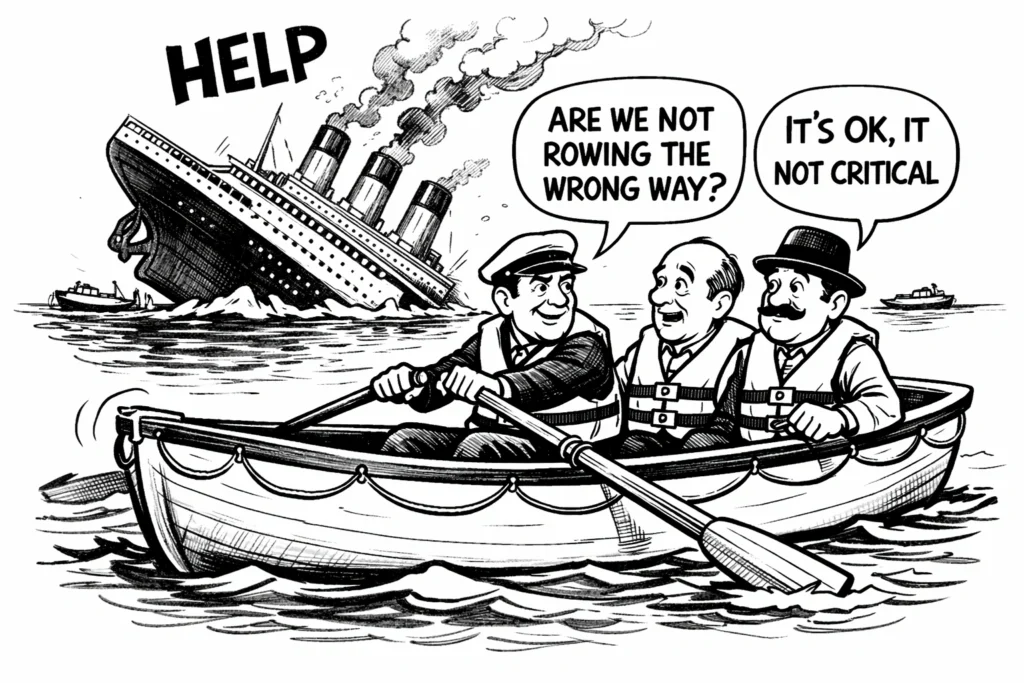
Not that I actually know the statistics, but regardless and purely for the sake of argument, let’s say that for every 8 unbelievers that Calvinism draws to the Christian faith, it pushes 2 unbelievers away. Now some might think that alone validates, justifies and should therefore merit their support of Calvinism. However, if that is the criteria – for the merit of our support – then we risk concentrating on numbers at the cost of the truth. If an unbeliever is going to reject Christ then let it be because they reject the truth, and not because they stumbled over a falsehood that we as believers have produced. To those who claim that a discussion about Calvinism is not salvation critical, I say no it is not essential to our salvation but I ask for who is it not salvation critical?